
Night Fishing Morehead City: How Dock Light Trips Work
Fish the Glow After Dark
Cast to night-feeding trout and redfish with Captain Jason today!
Published:
Updated:
Why Anglers Fish Dock Lights at Night
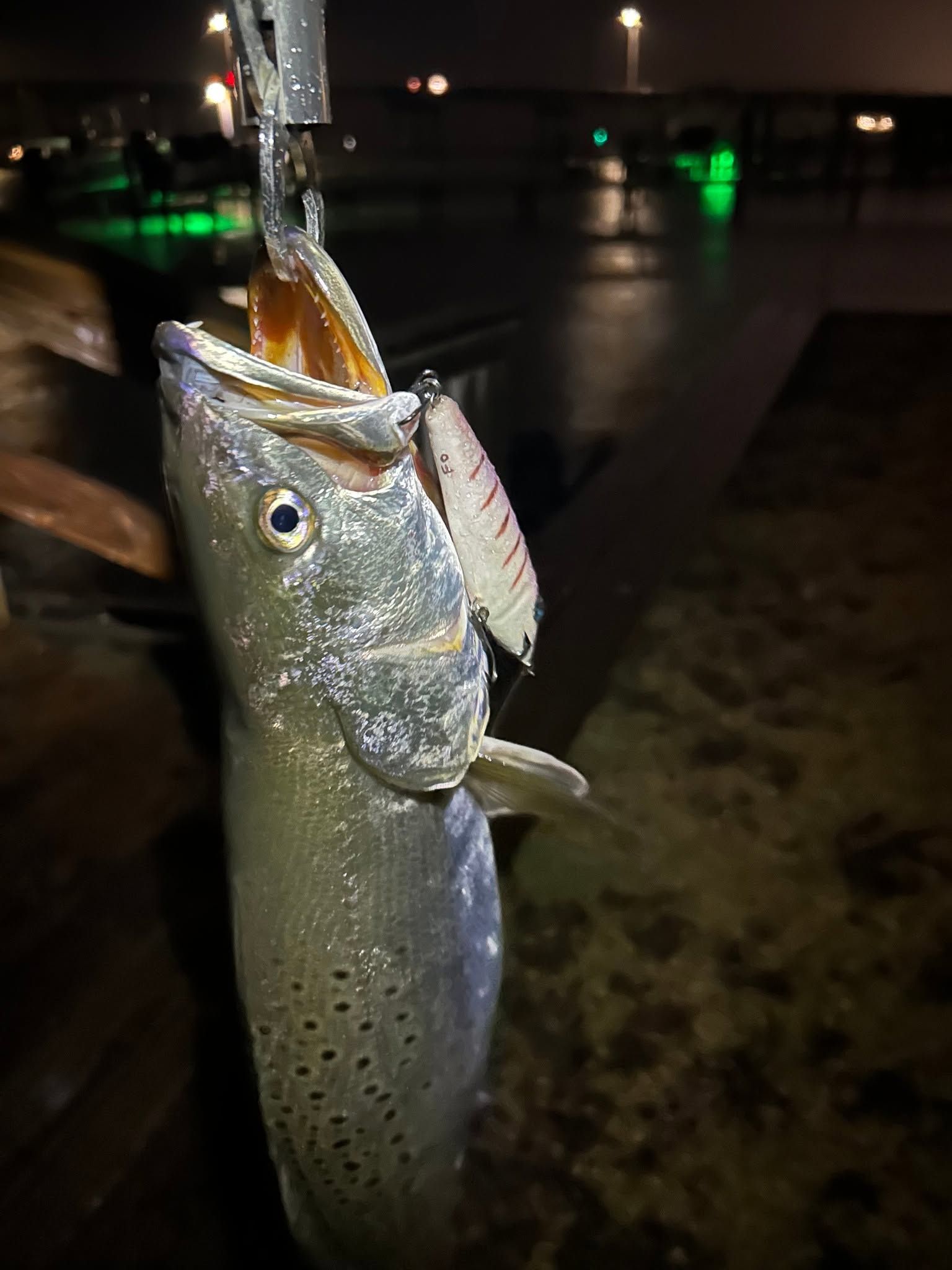
A lit dock changes the water around it after sundown. The light shines down and spreads across the surface, and small baitfish gather in that glow. Where baitfish gather, the fish that eat them tend to follow. For anglers chasing speckled trout and redfish, that makes a dock light one of the more interesting places to cast once the sun is gone.
The whole setup works because of contrast. Inside the light, fish can see prey easily. Just outside it, the water goes dark. Predators often hold in or near the shadow line, where they can watch the lit water without being exposed in it. That edge between bright and dark is where a lot of the attention goes on a night trip.
This is the idea behind dock light fishing, and it is why the approach is so popular for inshore night fishing. You are not covering miles of open water hoping to find fish. You are picking a spot where the light has already done part of the work of bringing food and feeders together.
What Makes Night Fishing for Trout and Redfish Different
Fishing after dark is a different game from a bright afternoon on the water. Your eyes adjust, your sense of sound and touch matters more, and the pace usually slows down. Boat noise, loud footsteps and bright flashlights can all spook fish, so a quiet approach counts for a lot.
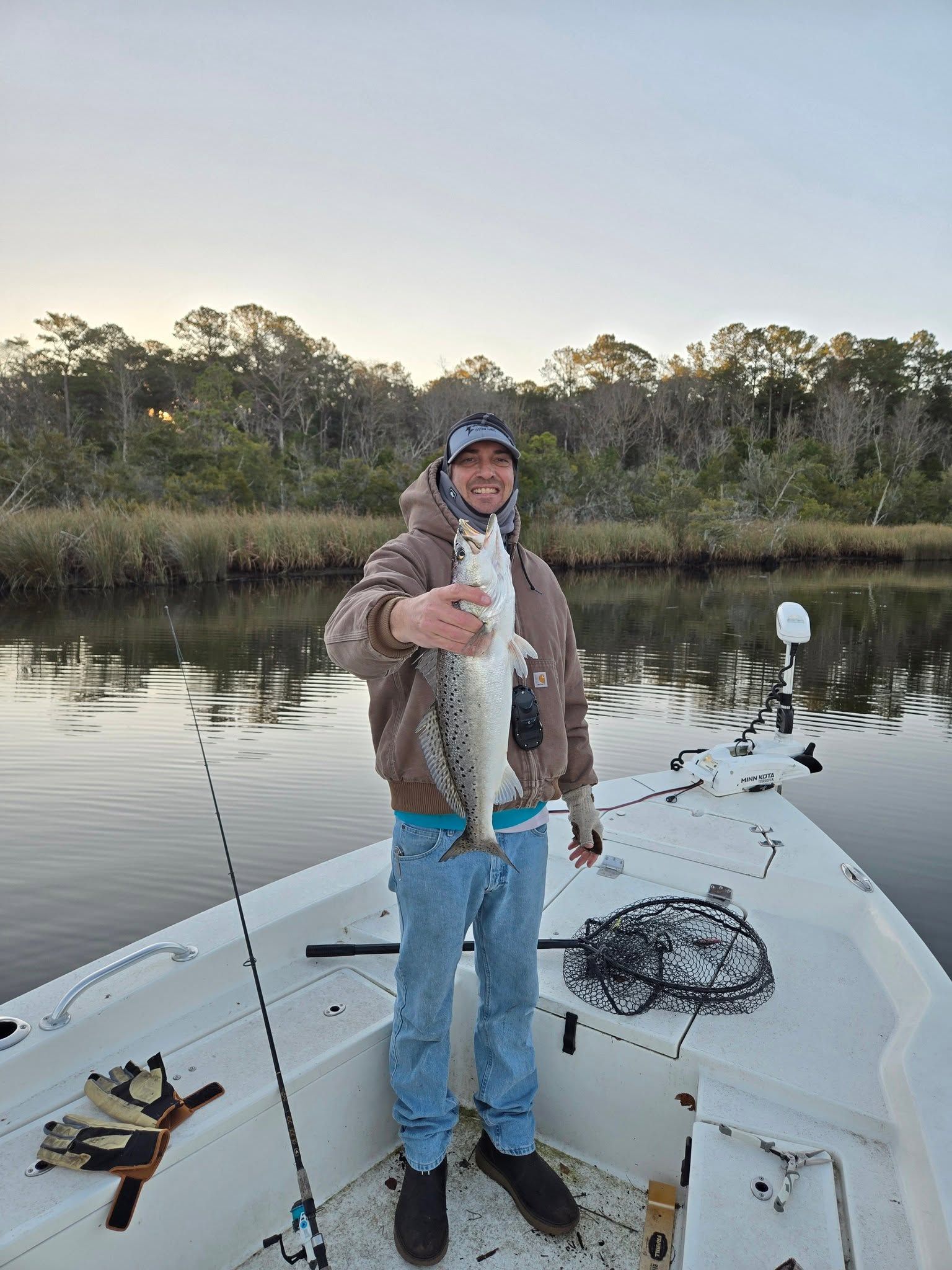
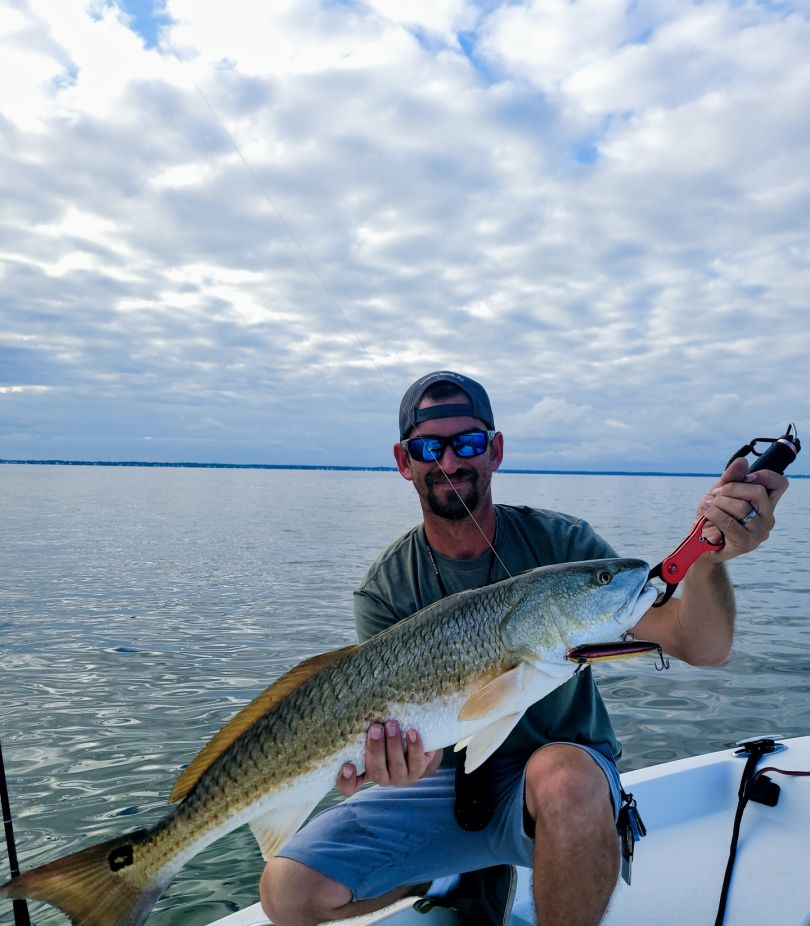
Both speckled trout and redfish are found in the waters around Morehead City, and both are known to feed at night. Trout tend to be the lighter, more finesse-oriented fish, while redfish bring weight and power. A night trip can put you in front of either one, and sometimes both in the same stretch of water.
It also helps to treat the dock as a structure, not just a light. Pilings, shadows and the edges of the glow all give fish something to hold against. Reading that layout in the dark is part of the skill, and it is the kind of thing a guide who fishes the area regularly can point out as you go.
How to Approach the Water
Approach matters as much as the lure you tie on. Fish sitting at the edge of a light are watching, and a clumsy arrival can end the bite before you make a cast. Here is the general order of how an approach works:
- Slow down well before you reach the dock and cut engine noise early.
- Position the boat so your casts can reach the light and the shadow line without you crowding the fish.
- Keep lighting on the boat low and pointed away from the water you plan to fish.
- Make your first casts to the edges, not straight into the brightest part of the glow.
- Work the shadow line and the pilings before moving on.
Patience pays off here. A few quiet, well-placed casts will usually tell you more than a dozen rushed ones. If nothing responds, adjusting your angle or your retrieve is better than simply casting harder.
Working Artificial Lures Under the Lights
Casting artificial lures is a natural fit for dock light fishing, because you can place a lure exactly where the light meets the dark and control how it moves. The goal is to make a lure look like a baitfish that has strayed out of the glow. A steady or slightly erratic retrieve past the shadow line can draw the kind of strike that a still lure never would.
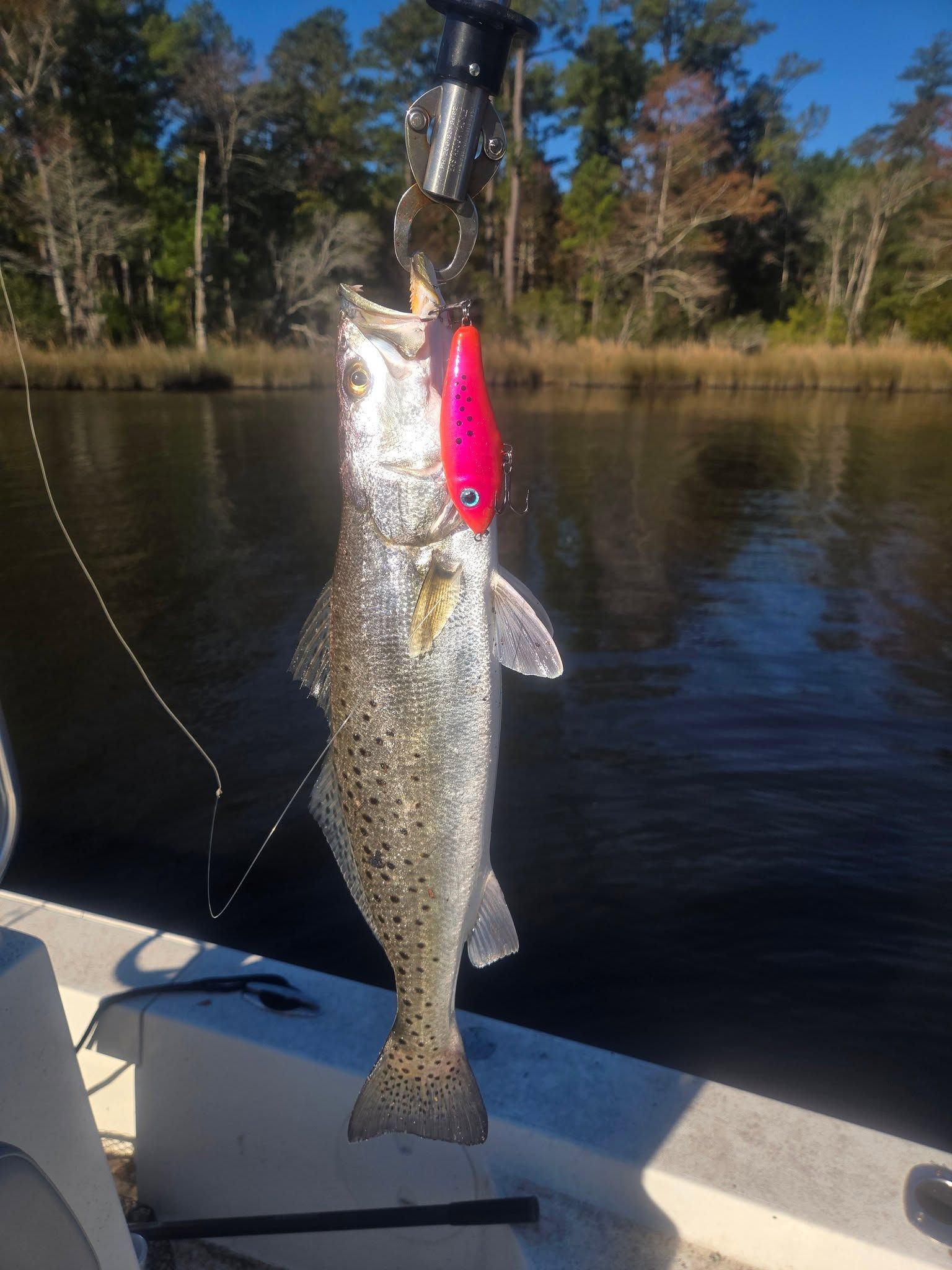
Presentation is the thing to practice. Think about where the lure lands, how fast it travels, and how close it passes to a piling or the edge of the light. Small changes in any of those can turn a following fish into a hooked one. It is a hands-on way to fish, and you feel everything that happens at the end of the line.
Captain Jason runs night trips built around this style, with artificial lures cast to night-feeding trout and redfish under dock lights. Anglers who would rather fish with bait can ask about live bait as an option, so the trip can be set up around how you like to fish.
What to Expect From a Guided Night Trip
A guided trip takes the guesswork out of the parts that are hardest to learn on your own. Finding a workable dock, positioning the boat quietly, and reading the water in low light all come easier when someone who knows the area is running things. Flippin Out Guide Service operates out of Morehead City, and Captain Jason fishes inshore waters that hold speckled trout, redfish and a range of other species.
On a lure-casting trip, you can expect to spend your time actively fishing, testing your presentation against fish that are feeding under the lights. It is a good setting for learning, too. If you are newer to artificial lures, you get a chance to see how retrieve speed, casting angle and lure placement change what the fish do. If you are experienced, it is a chance to sharpen your accuracy in tight, low-light conditions.
Redfish add their own excitement to the trip. Bull redfish are known for the power they show in shallow water, and that kind of pull on the line is a big part of why anglers like night fishing around docks. Nothing about a trip is a promise of a particular catch, since fishing is never that predictable. What you get is a well-set scene, good technique and a real chance to fish for two of the area's favorite inshore species after dark.
Is Night Fishing Under Dock Lights Right for You?
This style of fishing suits anglers who enjoy being hands-on and who like the quiet, focused feel of the water at night. It is different from a daytime trip, and many people find the change refreshing. The setting is calm, the target is specific, and the casting is precise.
If you are curious about night fishing Morehead City has to offer, a guided dock light trip is a straightforward way to learn how it works. You get to see why fish gather around the glow, practice putting a lure in the right place, and fish alongside a captain who knows the local water. Reach out to Flippin Out Guide Service to talk through the trip options and find the setup that matches how you want to fish.
